
5000 sq.ft
Experience Center
Completed
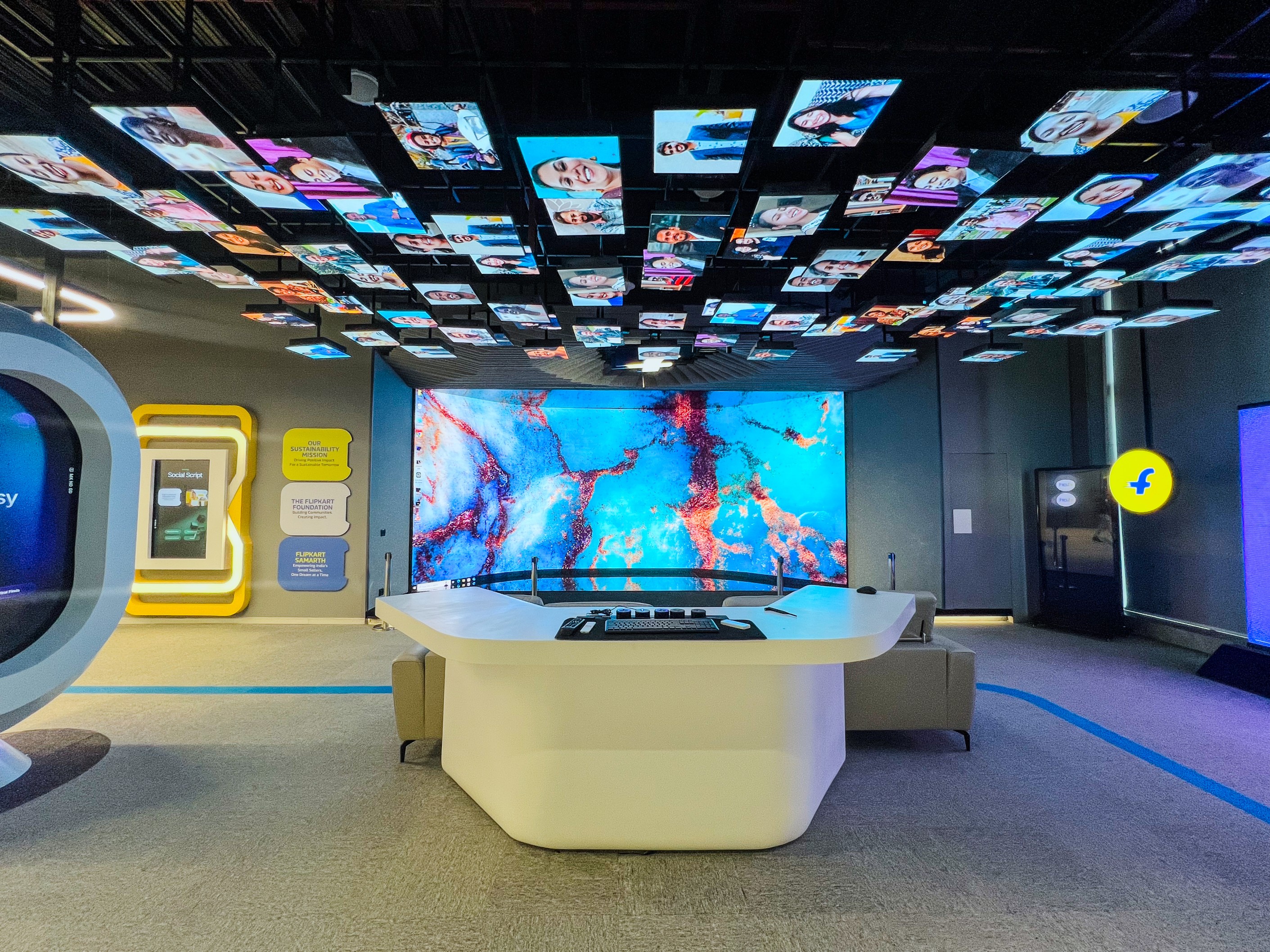
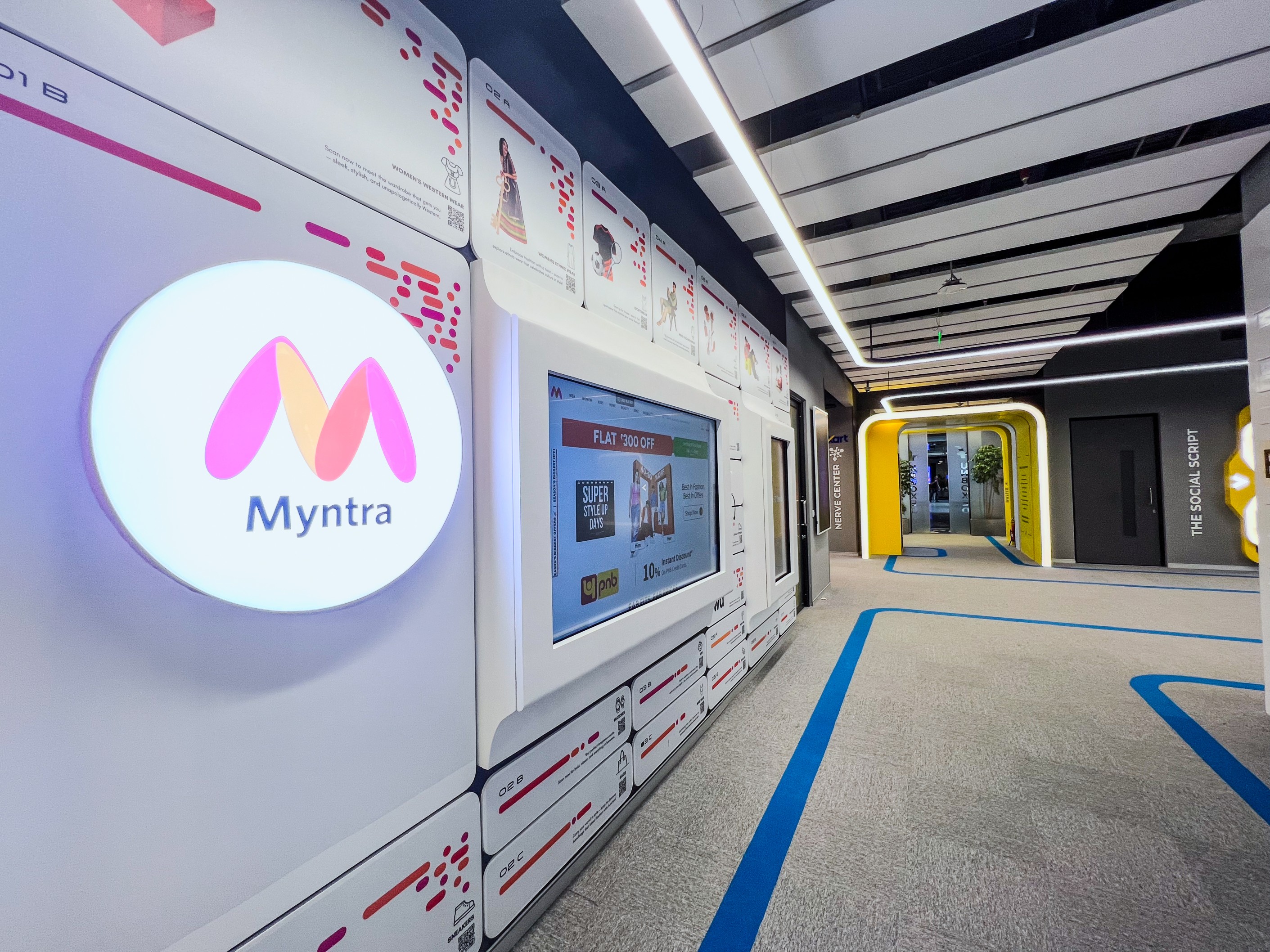
Rubenius began with a clear strategic plan: to present the seven independent brands as part of one unified ecosystem. This led to a simple but powerful spatial approach. The entire space follows a consistent language; materials, lighting, geometry, and movement remain continuous throughout, ensuring the environment always feels like one Flipkart. Within this, each brand is given its own dedicated space, designed to reflect its identity, tone, and experience. These are not themed corners, but complete environments where each brand tells its story in its own way, without compromise. The visitor journey is designed as a clear sequence: arrival, exploration, and exit, where each moment builds on the previous one, and nothing exists without purpose. Every material, surface, and lighting condition is carefully chosen to guide how the visitor feels at each stage. The experience begins in a controlled and focused manner, allowing the narrative to build gradually into more immersive and high-impact moments. This emotional progression is intentional and precisely designed. At its core, the space functions as an experience system rather than a collection of installations, with thirteen interactive zones mapped to specific roles in the narrative. The journey unfolds as a guided sequence where each interaction builds understanding step by step. Visitors are first greeted by an avatar at the interactive kiosk, setting the tone for the experience. The journey then moves into the Ekart zone, where a VR environment places visitors inside the logistics network warehouses, fulfillment systems, and microfulfilment centers, making scale directly experienceable. From here, visitors engage with the ClearTrip kiosk, followed by the Flipkart Minutes zone, where a dedicated kiosk communicates the quick-commerce proposition through a speed-driven environment. Adjacent interfaces highlight Flipkart’s social and sustainability initiatives. The Shopsy kiosk then shifts perspective, allowing visitors to experience hypervalue commerce as a rural entrepreneur. The journey builds toward its central moment the Pandora Box, a 24 ft by 10 ft LED-driven cinematic environment that brings together Flipkart’s story, scale, and future vision. Emerging from this, visitors encounter the Happy Faces ceiling installation, where 84 screens transform transaction data into human presence, making scale instantly tangible. Alongside this, the live data dashboard and India map display real-time orders and reach, allowing visitors to experience operations as they happen rather than as static information. The experience continues through the Testimonial Kiosk, where visitors record their responses, turning the journey into participation. The Technology and Innovation interface showcases innovations at Flipkart’s advancement, while the Timeline screen presents the brand’s evolution from inception to scale. The Myntra Fashion Wall introduces a personal interaction through virtual try-on, making the product experience immediate and engaging. Supporting the space are two executive boardrooms designed for high-level discussions and a live broadcast studio that enables real-time content creation and ongoing engagement. Together, these elements form a curated experiential system, not a collection of screens. The space brings together spatial design, content, and technology into one unified environment, one that does not just present information but creates a clear, immersive, and lasting understanding of Flipkart’s ecosystem.
The project introduced a set of layered challenges that had to be resolved simultaneously within a single system. The first was achieving coherence across seven independent brand identities while preserving their individuality. Each brand carries its own visual language, standards, and narrative depth. Bringing them together within one environment risks either dilution or fragmentation if not carefully structured. The resolution was a clear spatial framework where the overall environment consistently reflects Flipkart as one group through materiality, lighting, geometry, and movement, while each brand is given a dedicated environment designed to its own identity. This allows the space to be experienced both as one unified ecosystem and as distinct brand worlds without conflict. The second challenge was the scale and integration of technology across the experience. The center is not driven by a single installation but by a network of interconnected systems—large-format displays, immersive environments, kiosks, interactive interfaces, and real-time data integrations working together as one cohesive platform. Each element, from the Pandora Box and Happy Faces ceiling to the VR environments, interactive kiosks, testimonial capture system, timeline screen, and AI-driven interfaces, had to be designed, fabricated, and integrated with a central CMS. This CMS enables complete control of content, scheduling, and interactions across all thirteen zones through a single interface, ensuring the space remains operable by Flipkart’s internal teams without external dependency. The challenge was not just installation, but making all systems communicate seamlessly, reliably, and in real time. The Pandora Box presented a specific engineering requirement. The design called for a large, immersive curved LED experience measuring 24 feet in width and 10 feet in height. With flexible LED panels unavailable within the project constraints, a custom structural solution was developed using flat LED tiles arranged on a precision-engineered framework to create the perception of a continuous curve. At P1.2 pixel pitch, the display achieves a level of clarity comparable to cinema-grade environments at the intended viewing distance, making the experience visually seamless. The third challenge was execution within a fixed 45-day timeline while working inside a live office environment. Rather than compressing a conventional process, the entire project was planned to operate differently from the outset. A parallel execution model was adopted where spatial design, production, procurement, technology development, content creation, and installation progressed simultaneously. All dependencies were mapped in advance, ensuring that each decision aligned with delivery sequencing. A clear
approach of timeline versus budget versus design-guided execution. Instead of designing first and adjusting later, the design itself was developed to fit the timeline and budget from the beginning. Installations were categorized by complexity: static, dynamic, immersive, and interactive and executed in parallel tracks. Prefabrication, rapid on-site assembly, and continuous coordination between teams ensured that progress was uninterrupted. Work within the office was carefully phased, with major physical interventions completed during restricted hours without disrupting ongoing operations. The result is a fully integrated environment where spatial design, technology systems, content, and operations function as one. Every kiosk, screen, immersive installation, and interface is connected, controlled, and purposefully delivered within the defined timeline, at the required scale, and with complete operational readiness from day one.


.jpg)



.jpg)
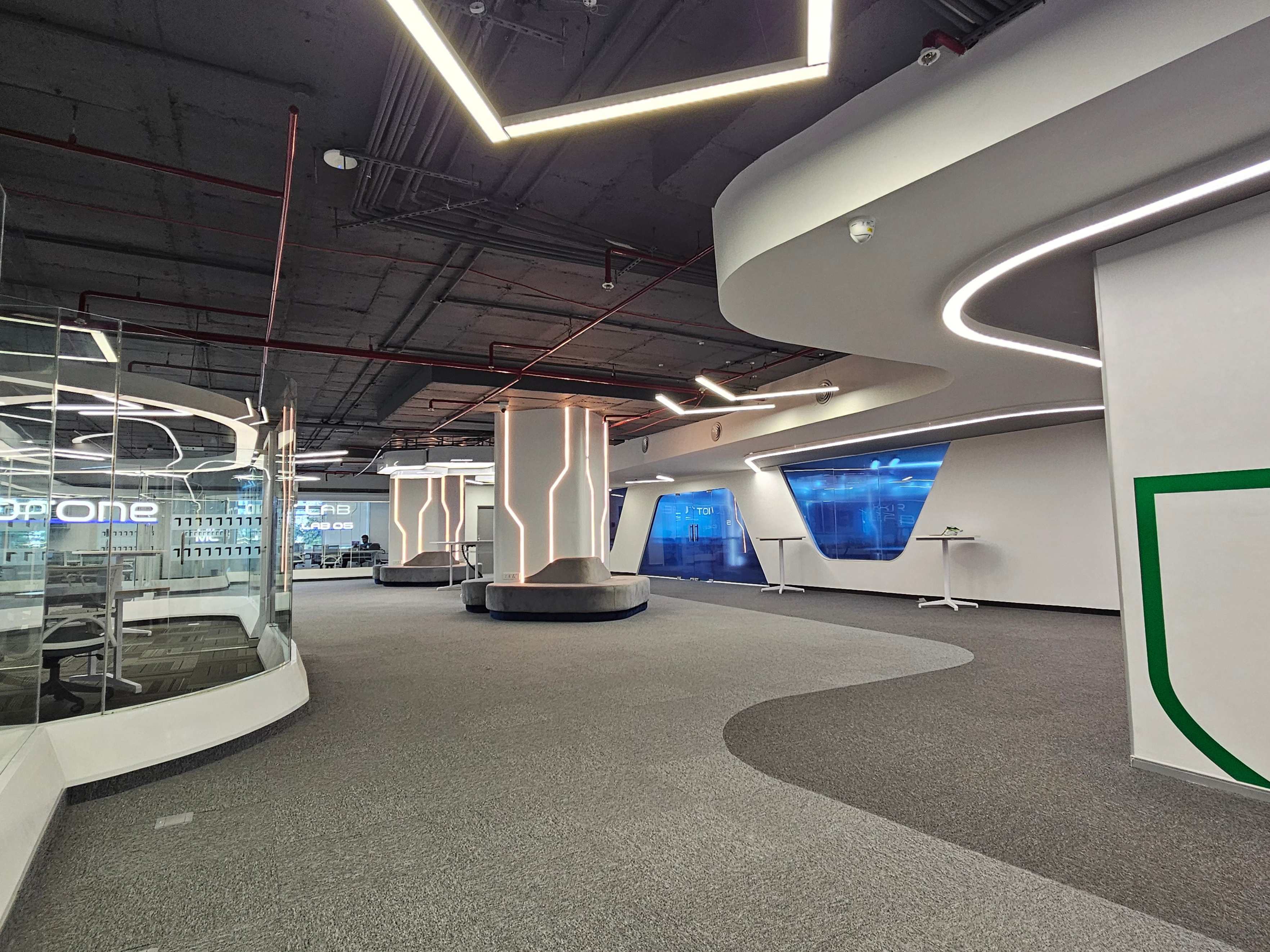
The distinction of this space lies in its clarity of intent and discipline of execution. It is not a collection of technologies assembled into a room but a performing system where every element exists to serve a defined purpose within the overall narrative. Nothing is ornamental. Every intervention is functional. More importantly, this is not a conventional experience center. It operates as a strategic base for investor and leadership interactions, where the space itself becomes the presentation. Instead of relying on decks or presenters, the environment communicates directly, structuring information, guiding attention, and building conviction through experience. The presence of seven independent companies does not fragment the narrative. The space holds its own identity as a unified ecosystem, where each brand contributes to a larger, coherent story. Visitors do not experience separate businesses; they understand how those businesses connect, scale, and operate together. The space is not static. Every zone is built with live content capability, allowing the environment to evolve without altering its structure. At the same time, it is consistent. The experience delivered on the first visit remains identical in clarity, structure, and outcome across every subsequent interaction. Communication does not vary with the audience or the presenter. The space holds the standard. What remains with the visitor is not just information but a clear and lasting impression, an understanding shaped through interaction, immersion, and memory rather than explanation.
The impact of the space is best understood through how it builds brand equity at the highest level of engagement. This environment is not designed for general visibility; it is designed for the people who influence how Flipkart is valued, trusted, and partnered with. In that context, brand equity is not shaped by the quality and consistency of experience powered by strong storytelling. The space ensures that every interaction with Flipkart at this level is structured, controlled, and aligned with how the organization needs to be understood. Before this, the narrative of Flipkart’s scale and ecosystem existed, but it relied on interpretation through presentations and fragmented conversations. The experience center removes that dependency. It presents the group as a unified operating system where seven independent businesses are understood in relation to each other, not in isolation. Each visit becomes a direct encounter with that system. Scale is not stated; it is experienced. Infrastructure is not described; it is made visible. Capability is not claimed; it is demonstrated through interaction. This consistency across every engagement ensures that perception does not vary with context, presenter, or audience. Over time, this repetition compounds. Investors, partners, and leadership audiences do not just receive information; they build a clear, retained understanding of Flipkart as an ecosystem. That clarity strengthens trust, sharpens positioning, and elevates how the brand is perceived in critical decision-making environments. The space functions as a long-term brand asset. It aligns experience with reality, ensuring that what Flipkart is and how it is perceived remain consistent. That alignment is what builds and sustains brand equity.


Scaler School of Business collaborated with Rubenius Interior Wellbeing to transform an older building into a next-gen learning hub. The design integrates advanced technology, sustainability, and inclusivity, reflecting Scaler’s commitment to innovation and environmental responsibility, creating an inspiring, future-ready educational space for students.

ISRO’s Dreamverse Tech Experience Center, designed by Rubenius Interior Wellbeing, celebrates India's space achievements and inspires future generations. This immersive space captures ISRO’s legacy through futuristic design, showcasing its technological advancements and offering a multi-sensory experience for visitors of all ages. The center provides an interactive and impactful journey aligned with ISRO’s vision.

The 900-square-foot Kewaunee Experience Center uses AR and VR for client engagement in lab solutions. It combines modern design with sustainability, showcasing features like the Wall of Excellence and Floating Wall for an immersive experience.


.svg)


