
10,500 Sq.ft
Institutional Experiential Design
Completed
Vedam School of Technology approached Rubenius with an ambition far greater than building classrooms — they wanted to create India’s next-generation ecosystem for experiential tech education. Their vision demanded a spatial framework that not only housed learning but actively accelerated it.
The opportunity centered on reimagining how physical space can shape students' mindsets, behaviors, and innovation outcomes as they enter rapidly evolving technology fields.
Rubenius identified four major opportunity pillars:
Traditional educational spaces often create a significant gap between theory and practice.
Vedam needed an environment where:
This allowed Rubenius to design a spatial model where learning by doing becomes the default mode for every student.
Vedam’s curriculum spans robotics, drone engineering, AI, coding, and hardware prototyping.
The opportunity was to integrate these diverse domains into one harmonious ecosystem that:
By designing spaces that visually and functionally communicate with one another, Rubenius enabled Vedam to create a fluid innovation environment rather than isolated rooms.
Vedam wanted a space that felt modern, expressive, and future-forward, a physical reflection of the mindset they aim to cultivate.
The opportunity was to use design elements to:
This meant the spatial identity had to work as a brand amplifier and an academic enabler.
As a tech-first academic institution, Vedam needed spaces that could evolve with new programs, technologies, and teaching methods.
Rubenius saw the opportunity to:
This approach positioned Vedam not just for today’s needs, but as a future-ready educational hub.
The larger opportunity was strategic:
To create a campus that establishes Vedam as a category-defining institution for engineering, robotics, and innovation programs.
A space capable of:
By leveraging spatial design as a strategic tool, Vedam had the opportunity to reshape expectations of what a modern Indian tech school should look and feel like.
Vedam provided an outdated layout that did not align with their academic requirements. The large classroom was originally expected to accommodate 180 students, which was structurally and ergonomically impossible.
Rubenius ran multiple permutations and combinations using 3D spatial simulations to resolve:
After extensive iterations, the team finalized a 130-student layout—the highest number possible while still prioritizing student comfort and learning efficiency.
Similarly, the smaller classroom was optimized to 60 students, ensuring no compromise on movement or visibility.
The additional complexity was Vedam’s preference for a theatre-style classroom, while the room itself was completely linear. Rubenius resolved this by engineering a hexagonal seating geometry—delivering theatre-level visibility within a constrained rectangular footprint.
The Innovation Lab required a transparent interface that allowed students to visually experience ongoing work without creating distraction.
Achieving this balance involved:
The final framework delivered a controlled transparency system that supports aspirational observation while protecting productivity.
Rubenius engineered custom classroom furniture to support Vedam’s high-activity pedagogy:
Ergonomic & Functional Design
Sleek Built-In Storage
Efficient Space Utilization
Durability & Strength
Aesthetic, Modern Appeal
Easy Maintenance
Flexible Configuration
This system evolved into a complete student-centric infrastructure tailored for Vedam’s pedagogy.
The existing building had no AC provisions, no dedicated service pathways, and lacked adequate ventilation.
The team integrated:
This modernization allowed a legacy building to perform at contemporary educational standards.
The site required extensive demolition before reconstruction:
Despite these constraints, Rubenius delivered a streamlined demolition strategy followed by precise reconstruction.
Phase 1 had to be delivered in 30 days. Spaces for student admissions had to be live within the first 30 days. Rubenius designed independent movement corridors ensuring:
Parallel teams worked across structural, civil, electrical, and interior fronts simultaneously—without compromising quality.
The project was executed inside the ADYPU University campus, requiring strict adherence to academic protocols:
This allowed the project to progress at high speed without affecting ongoing classes or student movement.
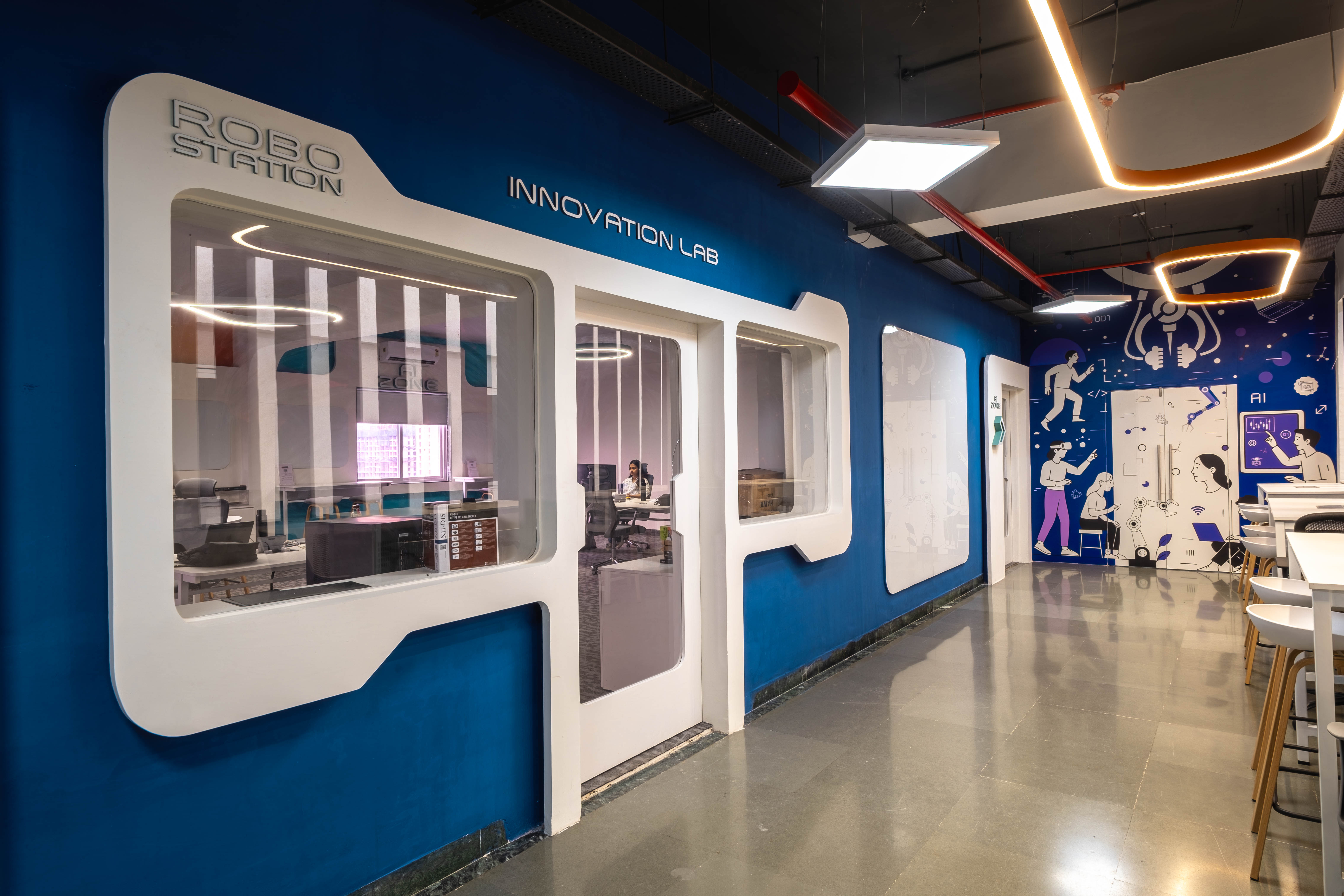
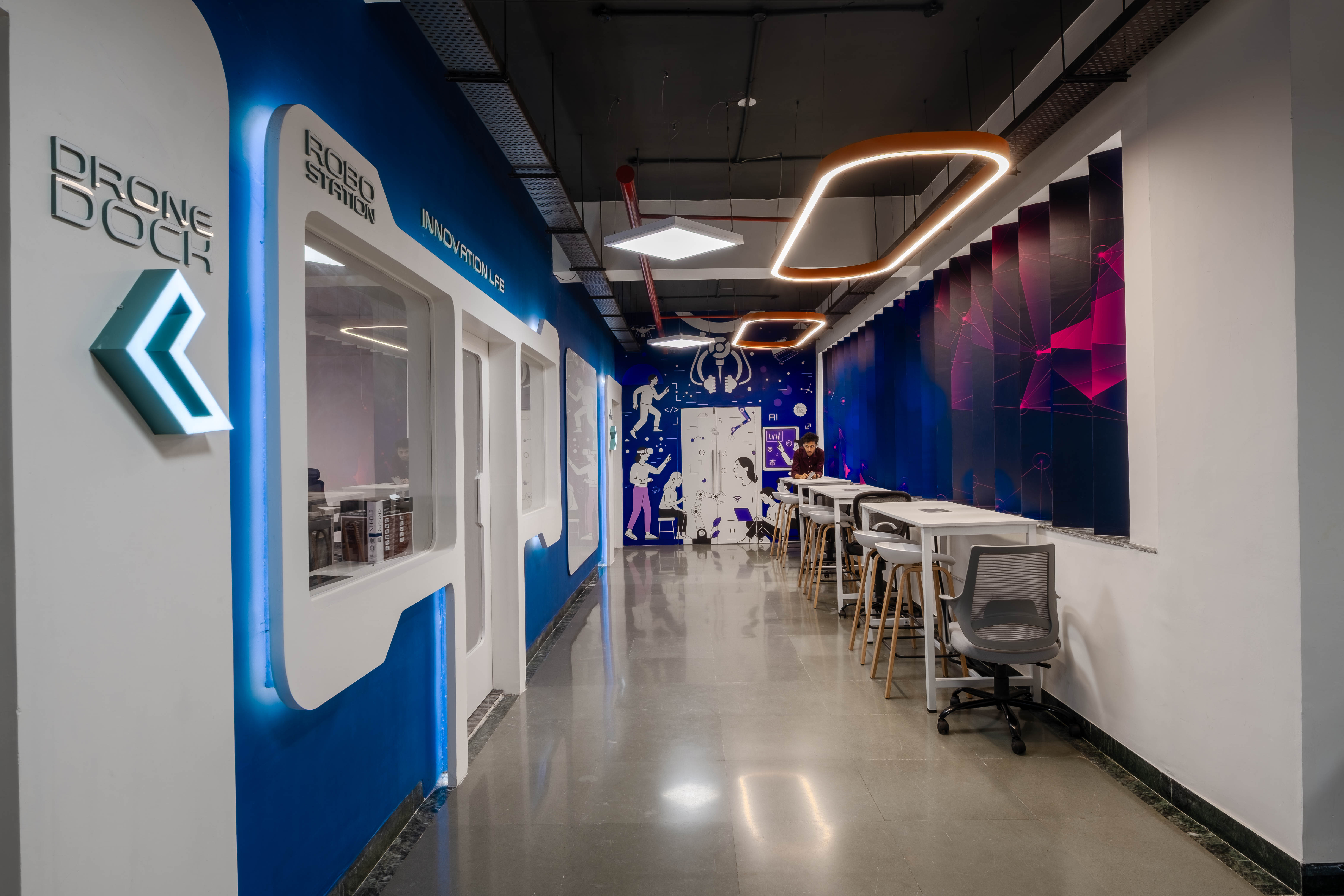
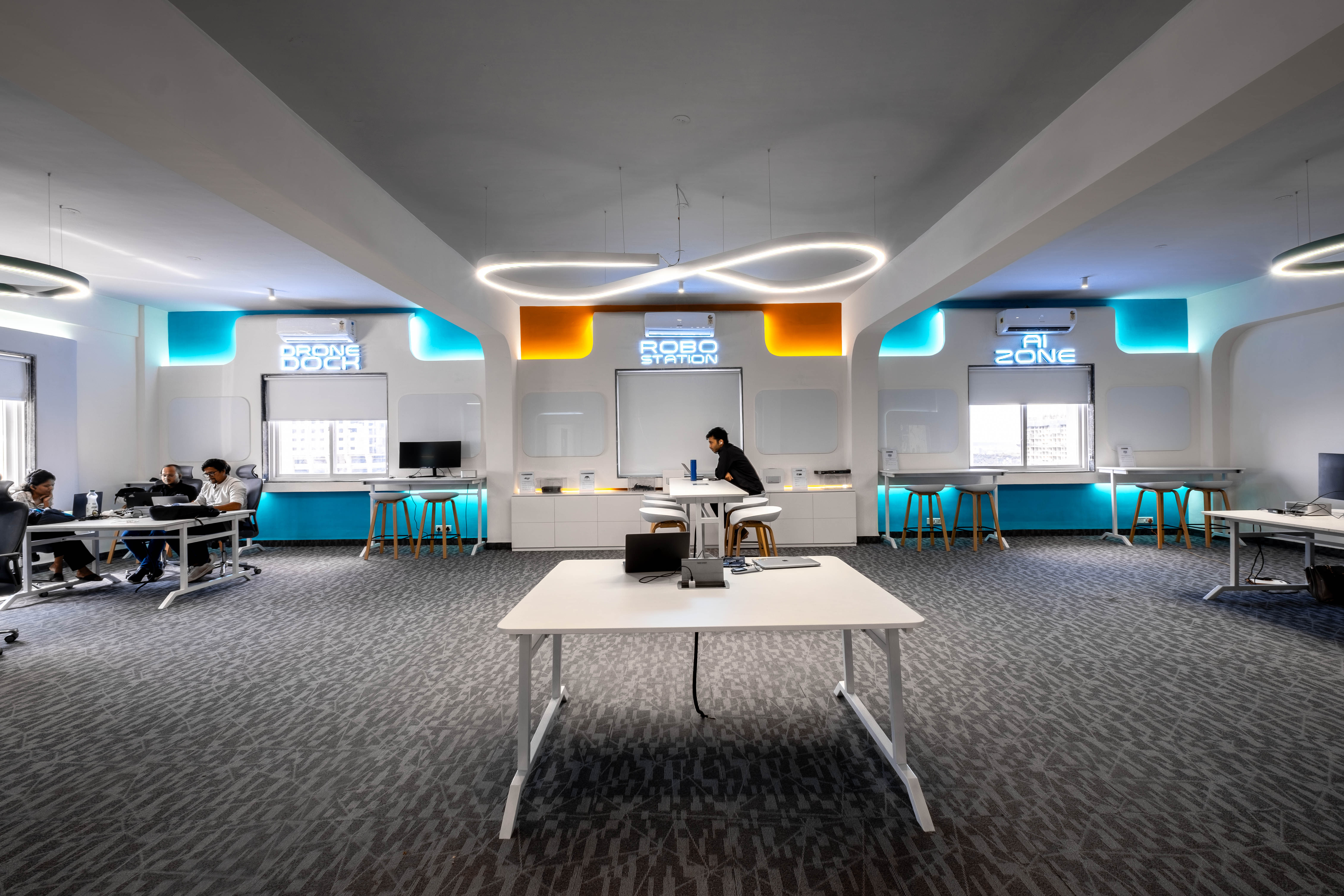
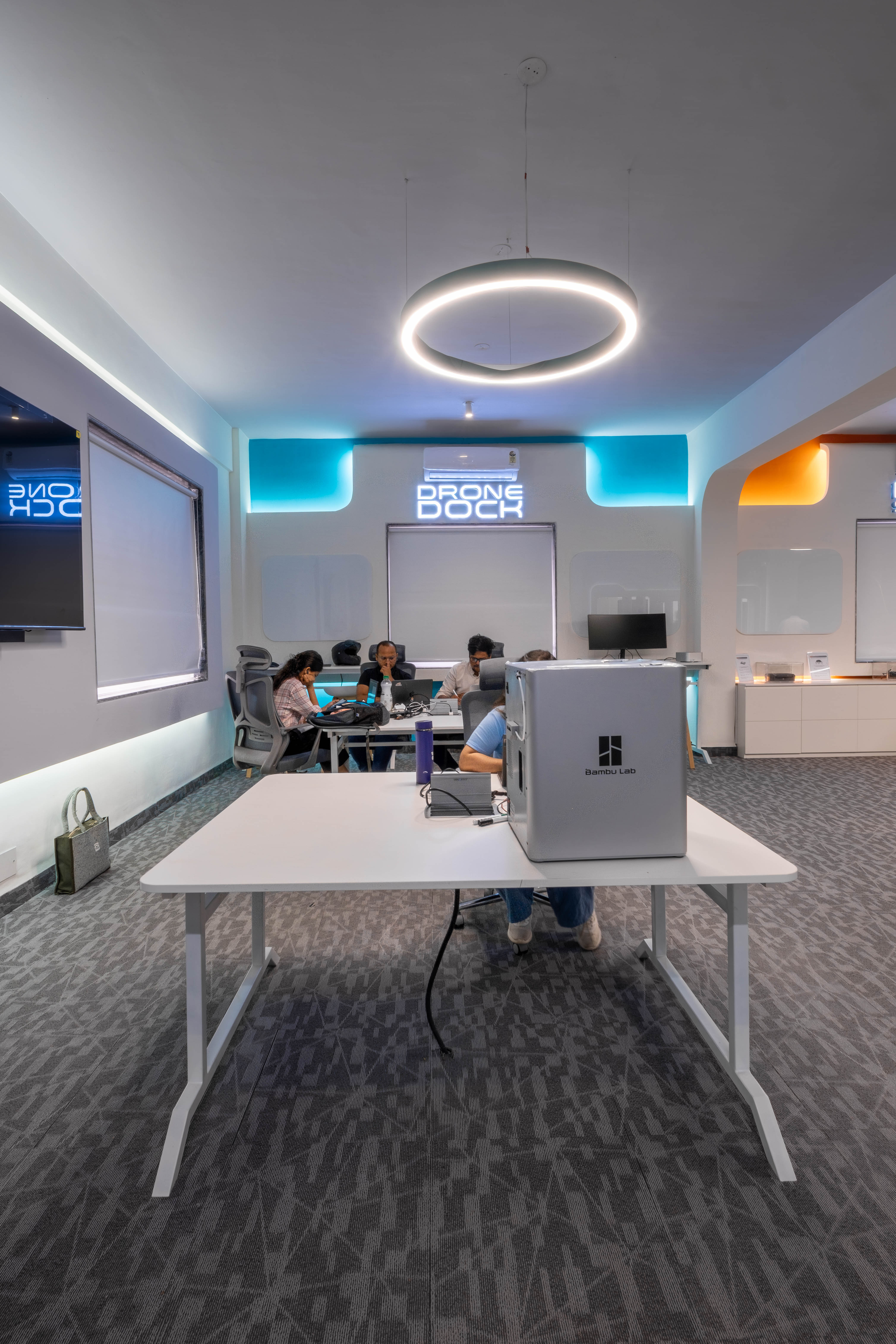
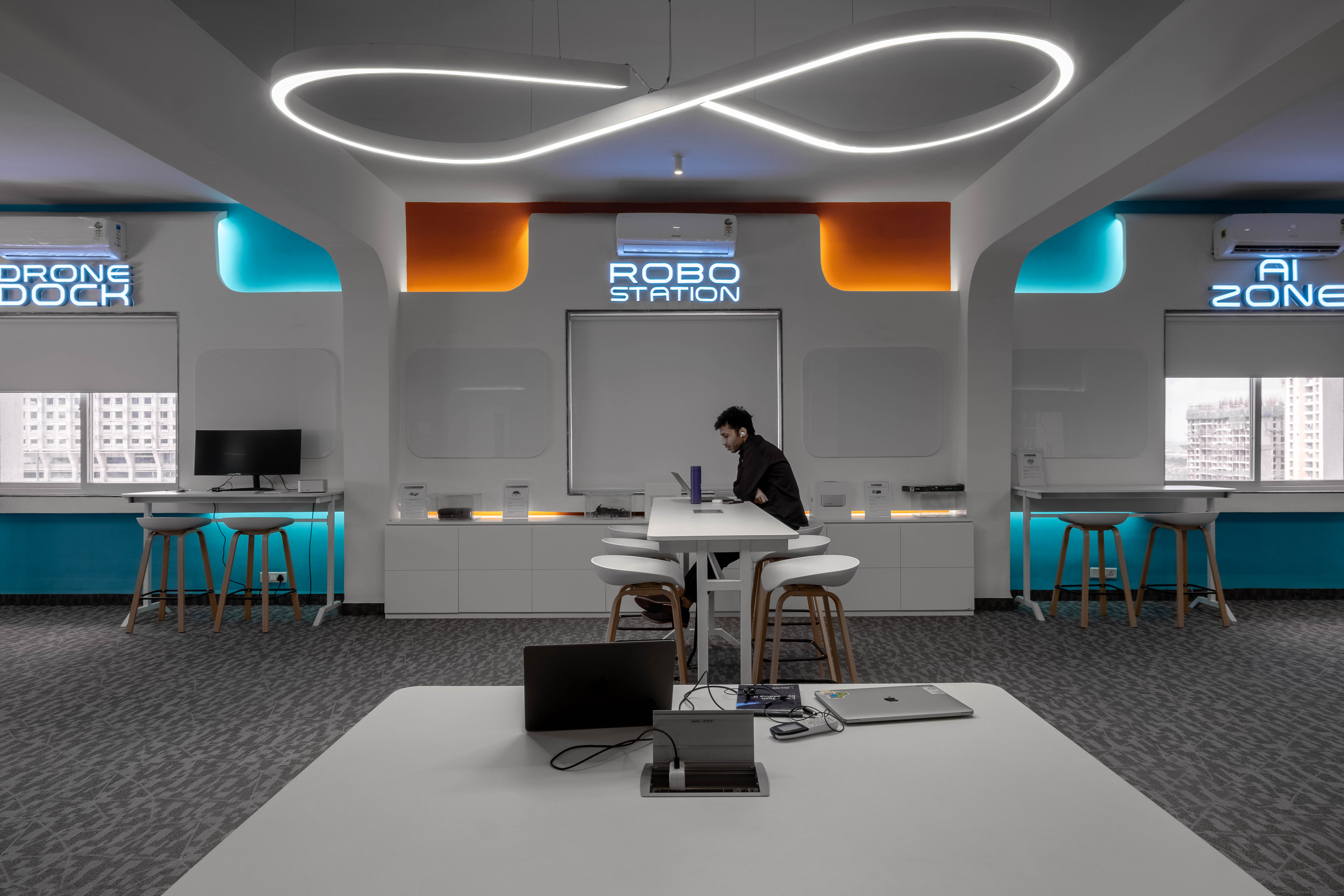
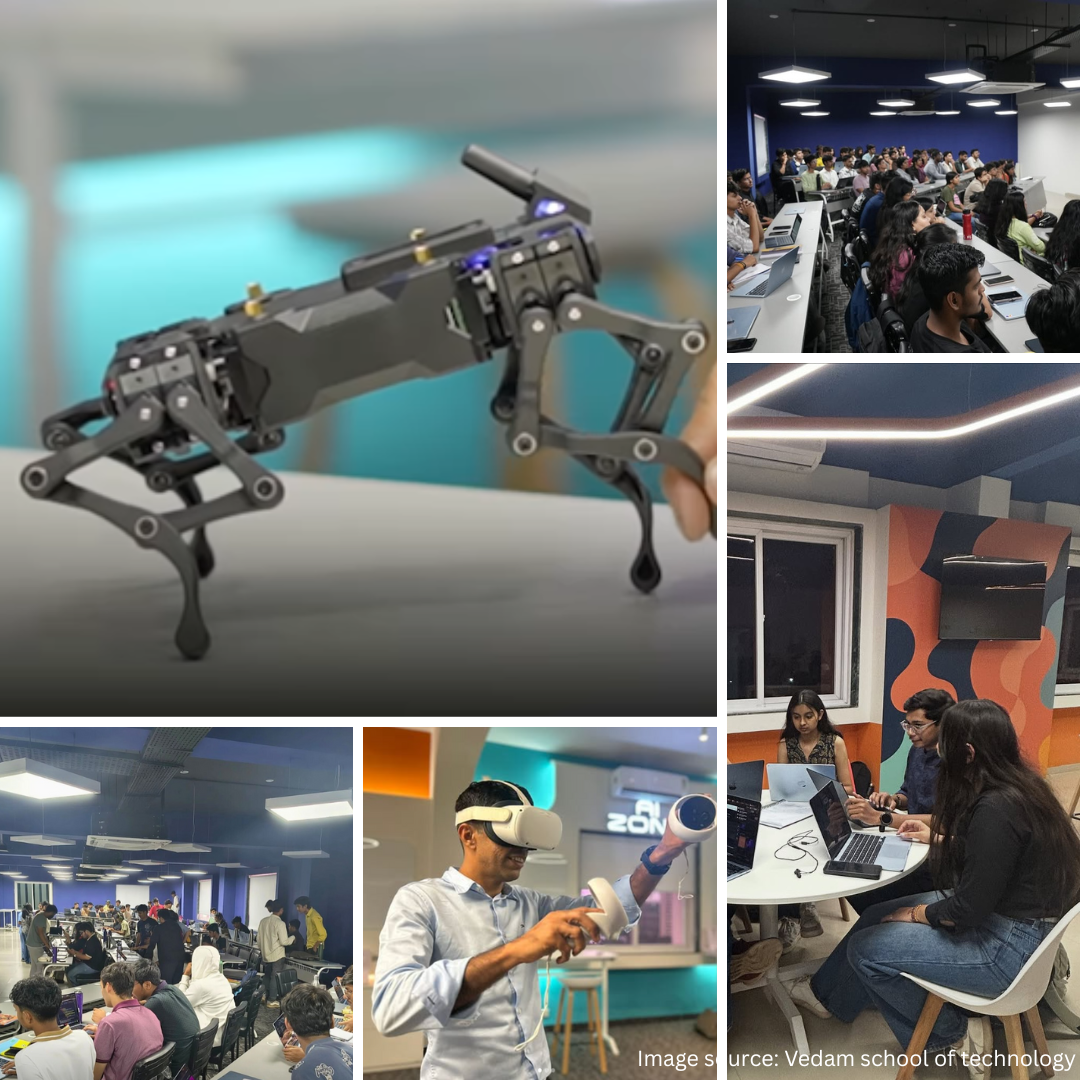
The final environment is a high-performance Learning Experience Center engineered for immersive education, scalable delivery, and innovative culture.
Key outcomes:
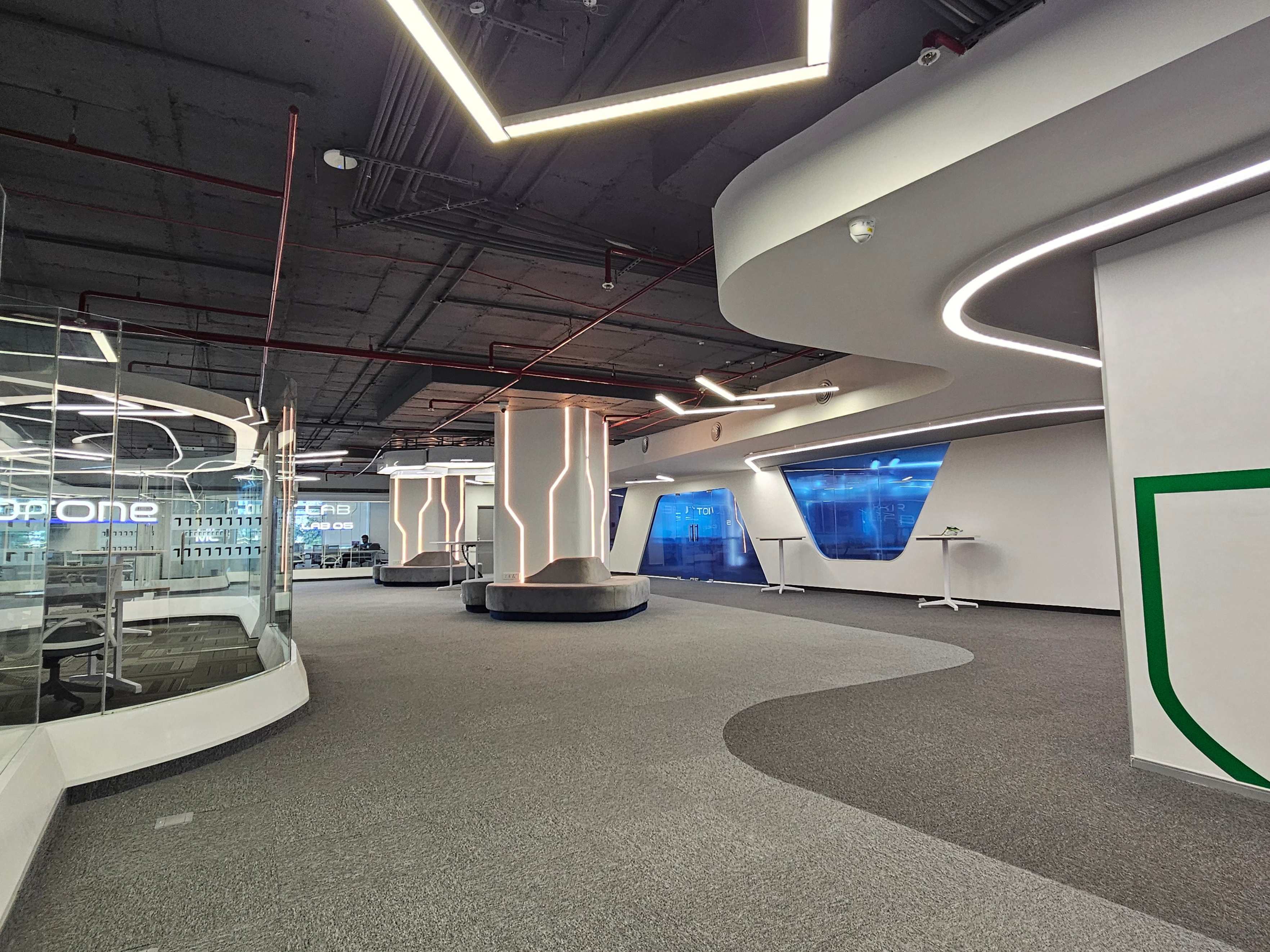


Scaler School of Business collaborated with Rubenius Interior Wellbeing to transform an older building into a next-gen learning hub. The design integrates advanced technology, sustainability, and inclusivity, reflecting Scaler’s commitment to innovation and environmental responsibility, creating an inspiring, future-ready educational space for students.

ISRO’s Dreamverse Tech Experience Center, designed by Rubenius Interior Wellbeing, celebrates India's space achievements and inspires future generations. This immersive space captures ISRO’s legacy through futuristic design, showcasing its technological advancements and offering a multi-sensory experience for visitors of all ages. The center provides an interactive and impactful journey aligned with ISRO’s vision.

The 900-square-foot Kewaunee Experience Center uses AR and VR for client engagement in lab solutions. It combines modern design with sustainability, showcasing features like the Wall of Excellence and Floating Wall for an immersive experience.


.svg)


