
For decades, workplace design has focused on creating environments that look good, function efficiently, and reflect brand identity. But these spaces have largely remained static, built once and expected to perform the same way over time, regardless of how people, technology, and work itself evolve.
That model is no longer sufficient.
Today, the integration of AI in workplace design is transforming offices into intelligent, adaptive environments that continuously respond to user behavior, business needs, and real-time data. This shift is not just technological; it represents a fundamental change in how we think about experiential design and workplace performance.

Traditional offices are built on fixed assumptions about how people will move, where they will gather, and how they will interact with the space. But in reality, these behaviors are dynamic and constantly changing.
AI is enabling a new generation of adaptive workspaces that evolve in real time.
Instead of static signage or repetitive digital screens, workplaces are now incorporating dynamic content systems that update based on context. A corporate lobby, for example, can shift its messaging depending on whether the audience is employees, clients, or investors. Meeting spaces can adjust their settings automatically based on the type of interaction taking place.
This transformation turns the workplace into a responsive system rather than a fixed environment.
The benefit is clear: when spaces adapt to users, they become more relevant. And relevance drives attention, engagement, and ultimately, better workplace experiences.
One of the most powerful applications of AI in experiential design is personalization.
In most offices today, communication is broad and generalized. Information is displayed for everyone, regardless of whether it is useful to them. This often leads to disengagement and information fatigue.
AI changes this by enabling context-aware communication within physical spaces.
Imagine entering a workspace where the information you see is tailored to your role, your schedule, or your immediate needs. Digital displays update in real time. Visual elements shift subtly to guide your attention. The environment begins to feel intuitive rather than overwhelming.
This is not just about creating engaging spaces; it is about improving clarity, recall, and decision-making.
In the future of workplace experience, personalization will not be a luxury. It will be a baseline expectation.
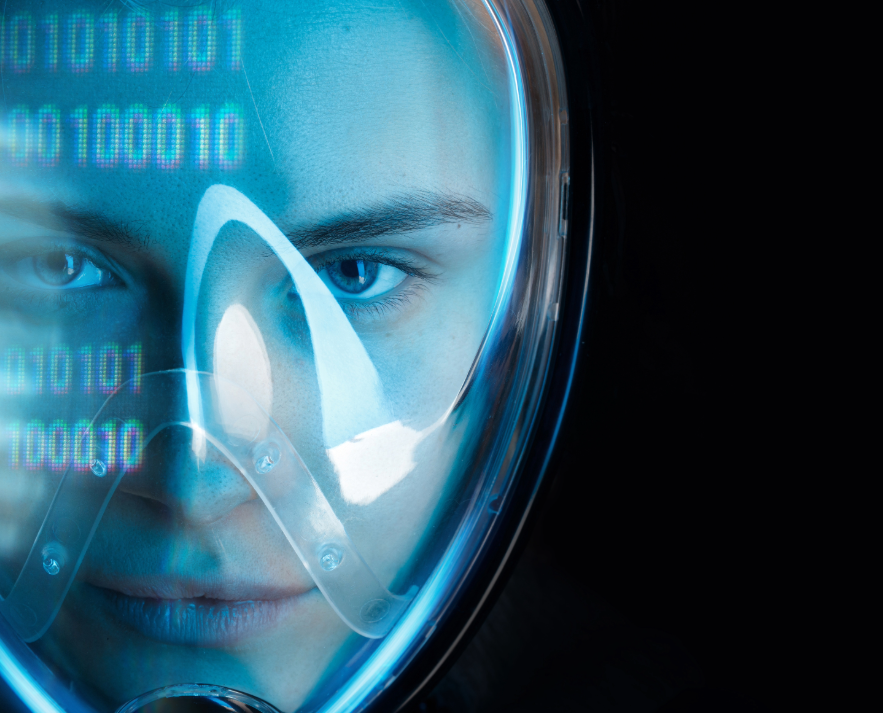
Another major shift in AI-powered workplace design is the emergence of conversational interfaces within physical environments.
Instead of interacting with multiple systems, booking rooms, adjusting lighting, and managing schedules, users can now interact directly with the space itself.
Voice-enabled systems and AI assistants allow employees to control their environment seamlessly. A meeting room can adjust lighting, display settings, and configurations based on a simple request. Follow-up actions, such as scheduling the next meeting, can happen instantly.
This reduces friction in everyday interactions.
When workplace systems become intuitive, employees spend less time navigating infrastructure and more time focusing on meaningful work. The result is a more efficient and productive environment, one that supports people without demanding their attention.
Perhaps the most significant impact of AI in workplace design is the shift from intuition-based decisions to data-driven spatial strategies.
In the past, designers relied on experience and best practices to predict how a space would perform. Today, AI allows us to test, measure, and refine environments continuously.
Using data from sensors and user interactions, workplaces can analyze movement patterns, occupancy levels, dwell time, and engagement. This insight helps identify areas of friction, underutilized zones, and opportunities for improvement.
As a result, spaces are no longer static; they are iterative and continuously optimized.
This introduces a new level of accountability in workplace experience design. Success is no longer defined only by aesthetics but by measurable outcomes such as the following:
Workplaces become not just designed environments but also high-performing systems.
AI in the workplace is not limited to software. It is increasingly taking physical form through robotics and automation.
From autonomous cleaning systems to robotic delivery solutions, these technologies are becoming part of everyday office operations. This requires workplaces to be designed with infrastructure that supports both human and machine interaction.
Dedicated pathways, charging stations, and service zones are becoming essential components of modern office design.
Beyond efficiency, the integration of robotics improves safety and reliability by reducing the need for humans to perform repetitive or high-risk tasks.
As AI continues to evolve, the physical workplace will need to accommodate a growing ecosystem of intelligent systems working alongside people.
Sustainability is another area where AI is making a measurable impact.
Traditional sustainable design focuses on materials and certifications. While important, these approaches are often static. AI introduces the ability to manage sustainability in real time.
Smart building systems can adjust lighting, temperature, and energy consumption based on occupancy and usage patterns. Resources are allocated dynamically, reducing waste and improving efficiency.
This transforms sustainability from a design goal into an ongoing operational strategy.
The result is a workplace that is not only designed to be sustainable but also actively behaves in a sustainable way every day.
As workplaces become more intelligent, one question becomes increasingly important: what happens to the human experience?
While AI enhances efficiency and personalization, the role of the physical workplace is ultimately to bring people together. Collaboration, culture, and connection cannot be fully replicated in digital environments.
This makes experiential design even more critical.
The future workplace must balance technology and human interaction, creating environments that are both high-performing and emotionally engaging. Spaces should not only function efficiently but also foster a sense of belonging and shared purpose.
Because in a world where work can happen anywhere, people will choose to come to places that offer meaningful experiences.
The integration of AI into workplace design marks a turning point in how we think about physical environments.
Offices are no longer static containers for work. They are becoming intelligent ecosystems capable of learning, adapting, and improving over time.
This shift moves us beyond traditional design into the realm of experience infrastructure, where every element of the space is aligned with user behavior and business outcomes.
The future of workplace experience lies in creating environments that are
AI is the enabler, but the real transformation lies in how we use it to design spaces that truly work.
Because ultimately, the success of a workplace will not be defined by how it looks but by how well it performs.
It is the use of AI to create adaptive, personalized, and data-driven workplace environments that respond to user behavior in real time.
AI improves workplace experience by making spaces more intuitive, efficient, and responsive through personalization and real-time optimization.
They are workplaces that dynamically adjust layouts, content, and conditions based on user needs, behavior, and contextual data.
AI is used to simulate designs, analyze space usage, predict behavior, and optimize workplace performance through data-driven insights.
No, AI enhances efficiency and experience but the human element remains essential for collaboration, culture, and connection.


.jpg)
.png)
.png)
.png)

%401x.svg)


.svg)