
A food lab is not simply a high-end kitchen. It is a culinary innovation lab, a controlled, data-driven environment designed to test, refine, document, and scale ideas. Somewhere between a professional kitchen and a research studio, a food laboratory reshapes how organizations think, decide, and innovate.
The difference between a commercial kitchen and a food laboratory is not cosmetic—it is philosophical.
A conventional kitchen follows a linear workflow: prep → cook → serve. It is optimized for repetition. A food lab follows an iterative cycle: cook → test → taste → discuss → document → refine. Here, learning is the output.
Food laboratory design prioritizes:
This shift transforms cooking from a final act into a continuous research process.
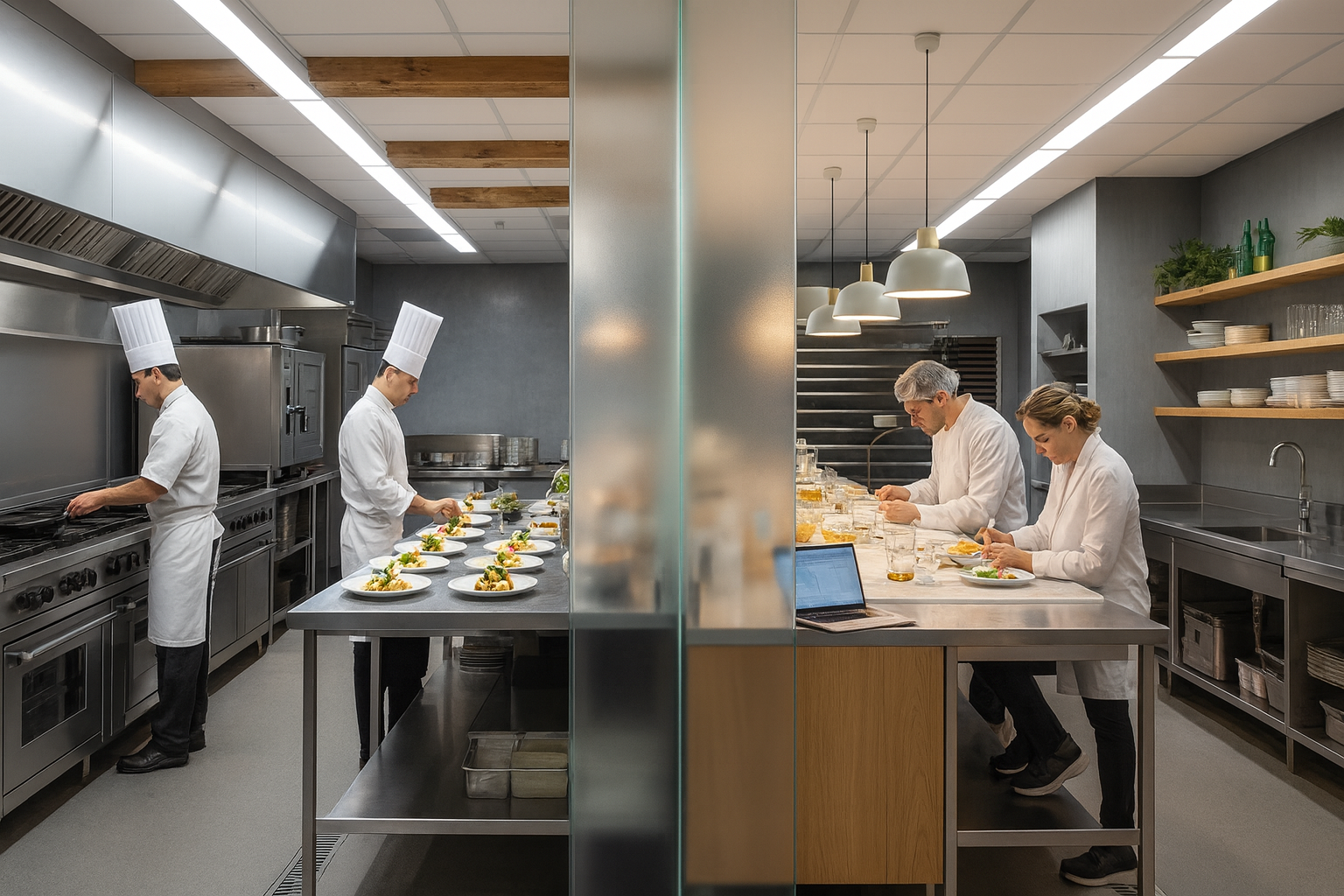
This is the heart of the food lab—where ideas turn into edible prototypes. Unlike mass kitchens, this space is designed for:
Material choices play a critical role here. In a food lab commercial kitchen, every element works together to support controlled experimentation. Seamless epoxy flooring and integrated drains allow quick, thorough wash-downs between trials, while curved skirting removes hidden dirt traps and improves hygiene. Stainless-steel counters provide a durable, non-reactive surface that withstands heat, moisture, and frequent cleaning. Controlled lighting minimizes visual bias during evaluation, while organized ingredient storage and clearly defined wash and waste routes support hygiene, consistency, and smooth workflow.

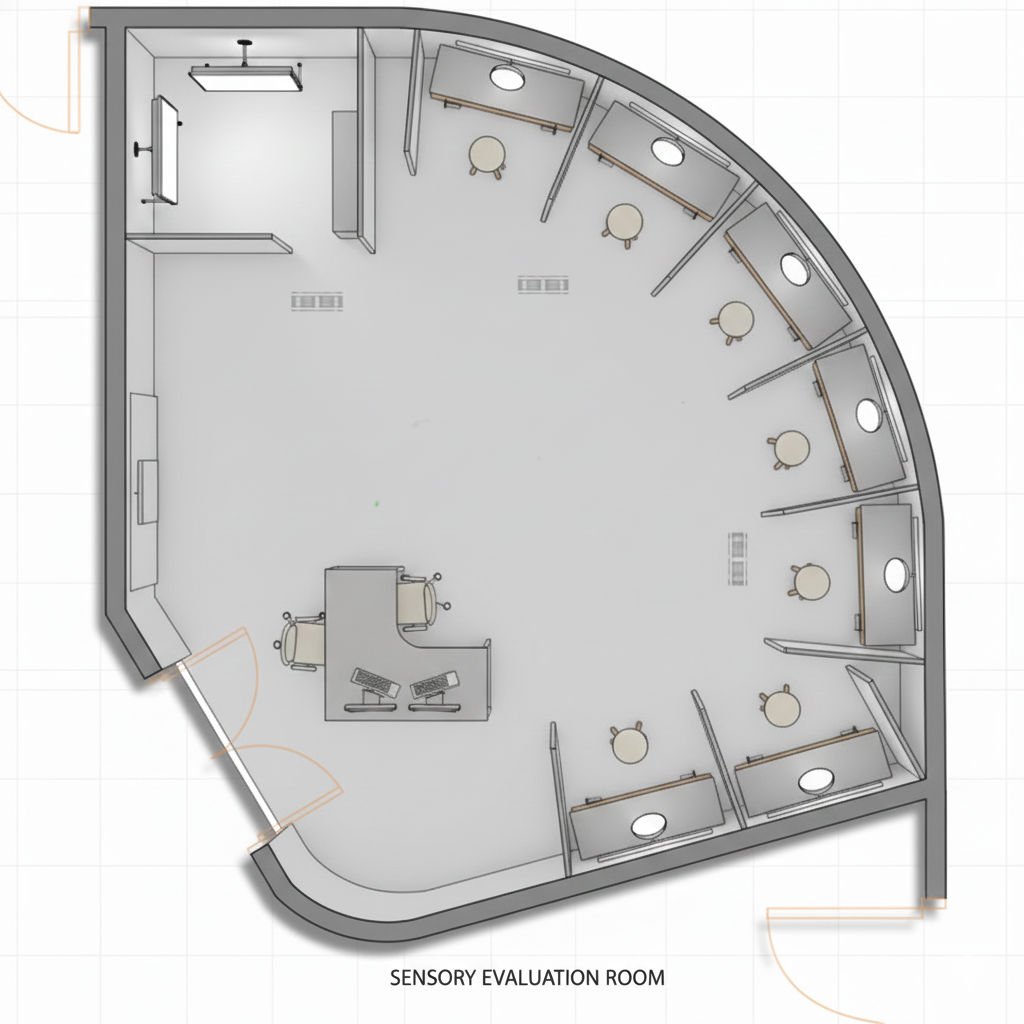
A defining feature of a food lab is its sensory evaluation space. This is where food is no longer judged by instinct alone but assessed through a structured and controlled process. The purpose of this room is simple yet powerful—to remove external influences so that feedback is based solely on the product itself. Lighting is carefully managed so that visual cues do not influence judgment. By standardizing the way food is seen, the focus shifts naturally to taste, aroma, texture, and mouthfeel. Ventilation works quietly in the background, ensuring that no lingering kitchen smells enter the space. Clean, neutral air allows each sample to be evaluated on its own merit, without interference from previous preparations. Within booth-style tasting stations, individuals assess food in isolation, enabling a focused and unbiased evaluation of taste, aroma, texture, and appearance. As a result, the sensory room converts individual perceptions into reliable insights, supporting evidence-led culinary development and informed design decisions.
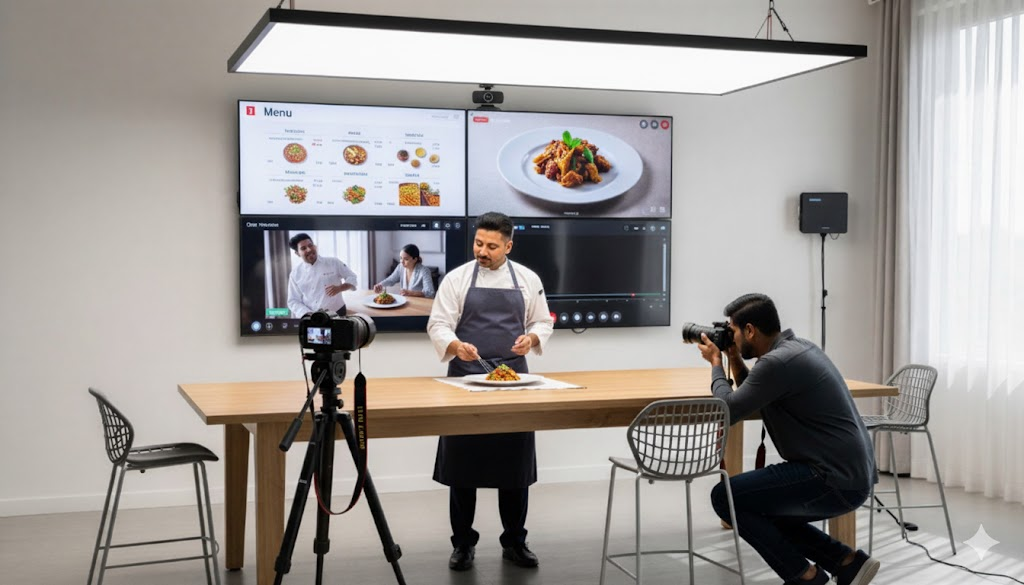
In today’s market, visual appeal is as critical as flavor. Integrating a photography and content studio within the food lab allows plating, presentation, and brand alignment to be tested alongside recipe development.
This space enables:
By shortening feedback loops, design and culinary decisions evolve together—not in isolation.
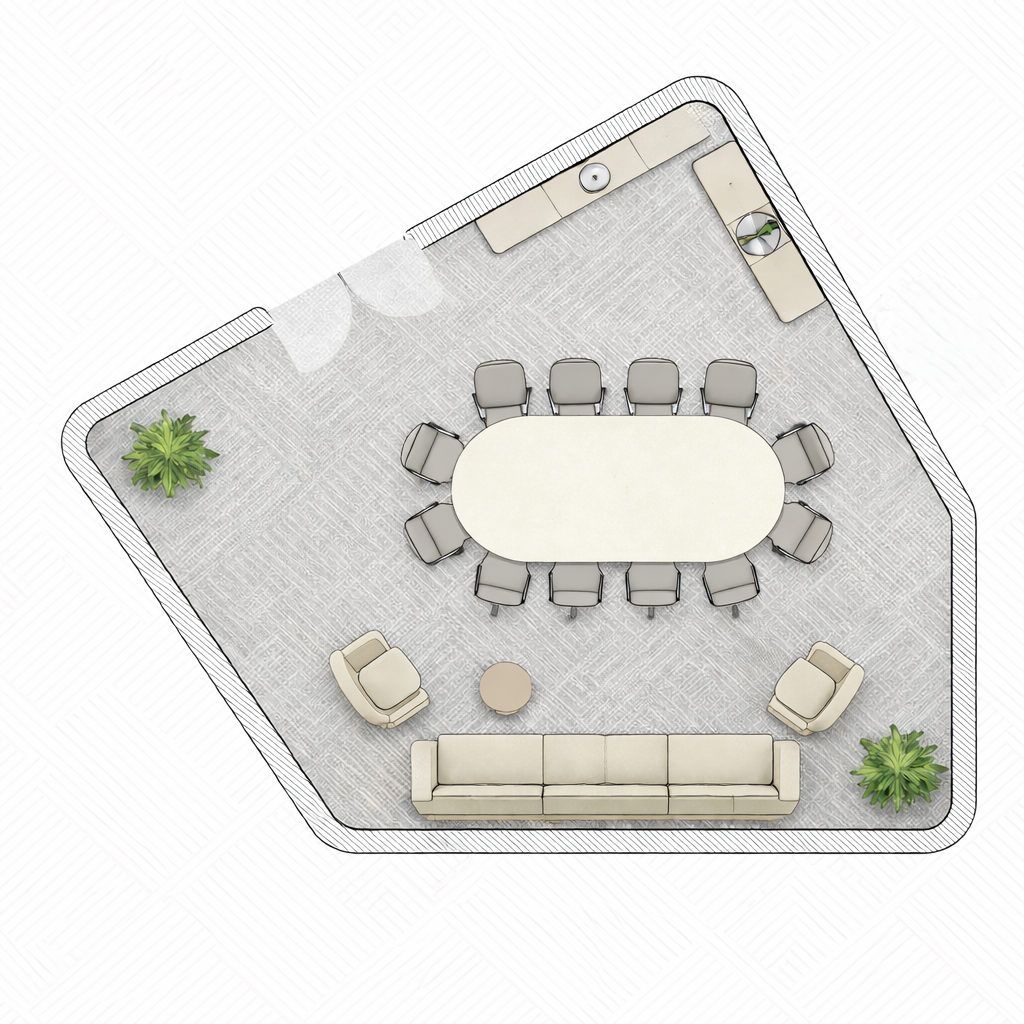
The Brief & War Room acts as the collaborative core of the food lab, bringing teams out of the kitchen and into focused discussion. It is a space dedicated to reviewing ideas, aligning strategies, and making decisions based on what has just been tested. Concept discussions, menu planning, and product reviews all take place here, informed by real-time inputs from the culinary and sensory zones. Because this room is positioned centrally within the food lab, it creates a natural pause point—allowing insights from cooking, tasting, and documentation to feed directly into the next round of development. By connecting experimentation with conversation, this room ensures that ideas move forward with clarity, direction, and shared understanding.
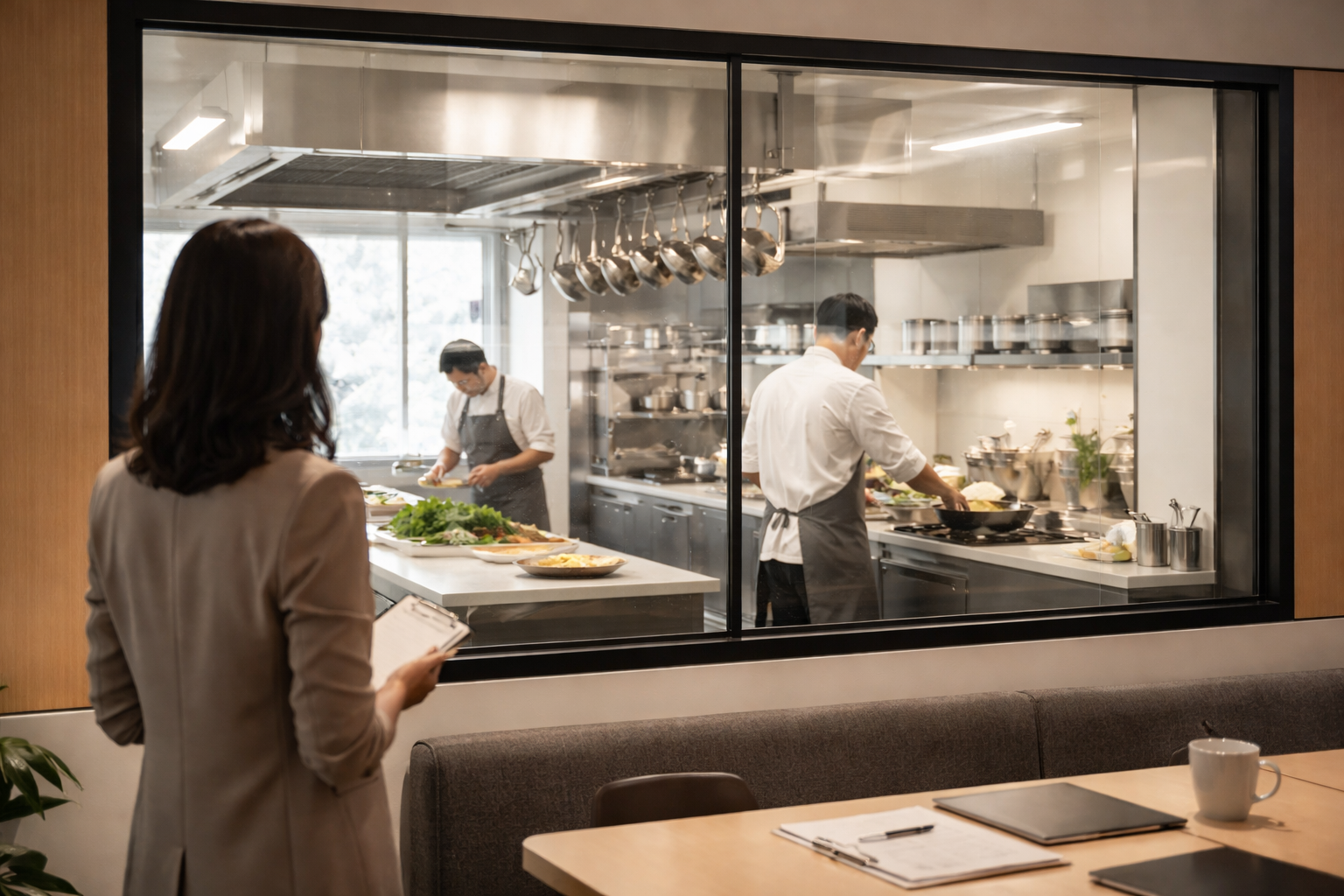
Conference and observation areas play an important role in connecting people to the food lab without interrupting its operation. They allow stakeholders, researchers, and decision-makers to witness the development process firsthand while preserving the integrity of controlled environments. By thoughtfully separating observation from operation, the food lab remains focused and efficient while still inviting insight, dialogue, and informed decision-making.
In doing so, these areas bridge the gap between experimentation and strategy, turning observation into meaningful participation. Observation windows offer real-time visual access to cooking and testing areas, maintaining hygiene while ensuring transparency. Paired with nearby discussion spaces, they keep conversations grounded in what’s actually happening—turning observation into informed, confident decisions rather than assumptions.
Often underestimated, wash zones quietly sustain the rhythm of a food lab. Strategically placed support areas prevent bottlenecks, uphold hygiene standards, and allow rapid turnaround between trials—ensuring innovation remains disciplined, not chaotic.
What differentiates a good food lab from a great one is flow.
A well-designed food lab supports a natural, intuitive sequence:
Cook → Test → Taste → Discuss → Document → Iterate
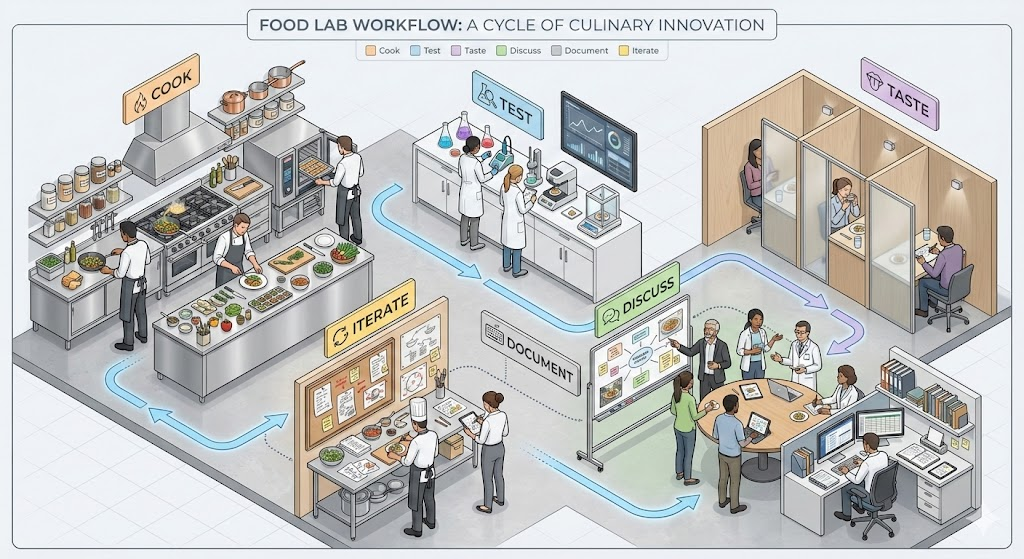
Clear circulation paths prevent incompatible functions from crossing. Teams move effortlessly between zones, reducing friction and preserving focus. When flow is right, complexity disappears—and creativity accelerates.
Every surface supports cleanliness, durability, and long-term usability. In a professional food lab, material selection is a matter of operational performance. Because these spaces function as a hybrid of a commercial kitchen and a sterile laboratory, every surface must prioritize hygiene and durability over aesthetics.
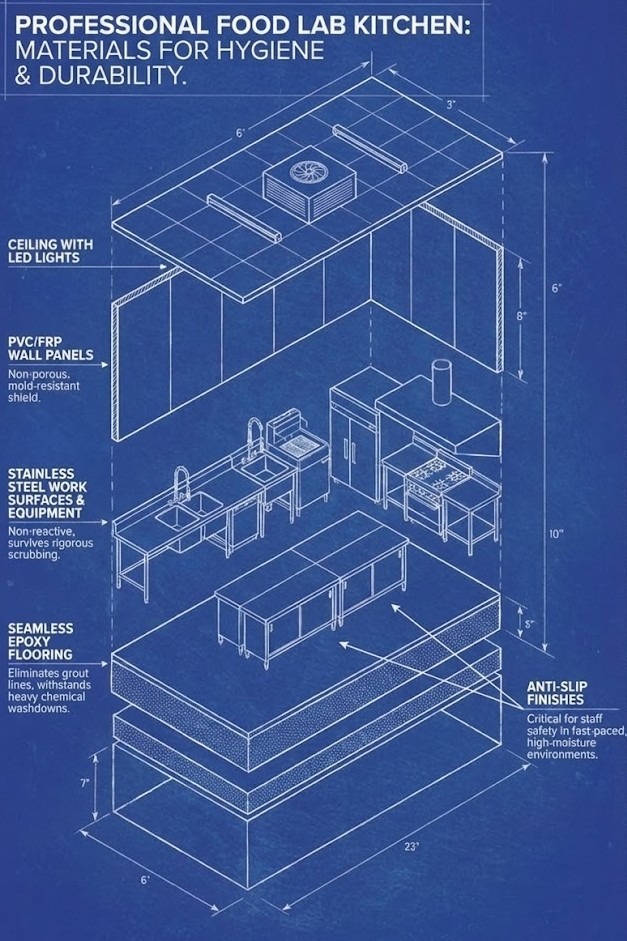
By utilizing these industrial-grade materials, the lab becomes a resilient workspace where the design actively supports culinary innovation and uncompromising hygiene.
Lighting in a food lab is a tool for accuracy. High-CRI fixtures reveal subtle changes in texture and color, support color-true photography, and eliminate visual bias during tasting.
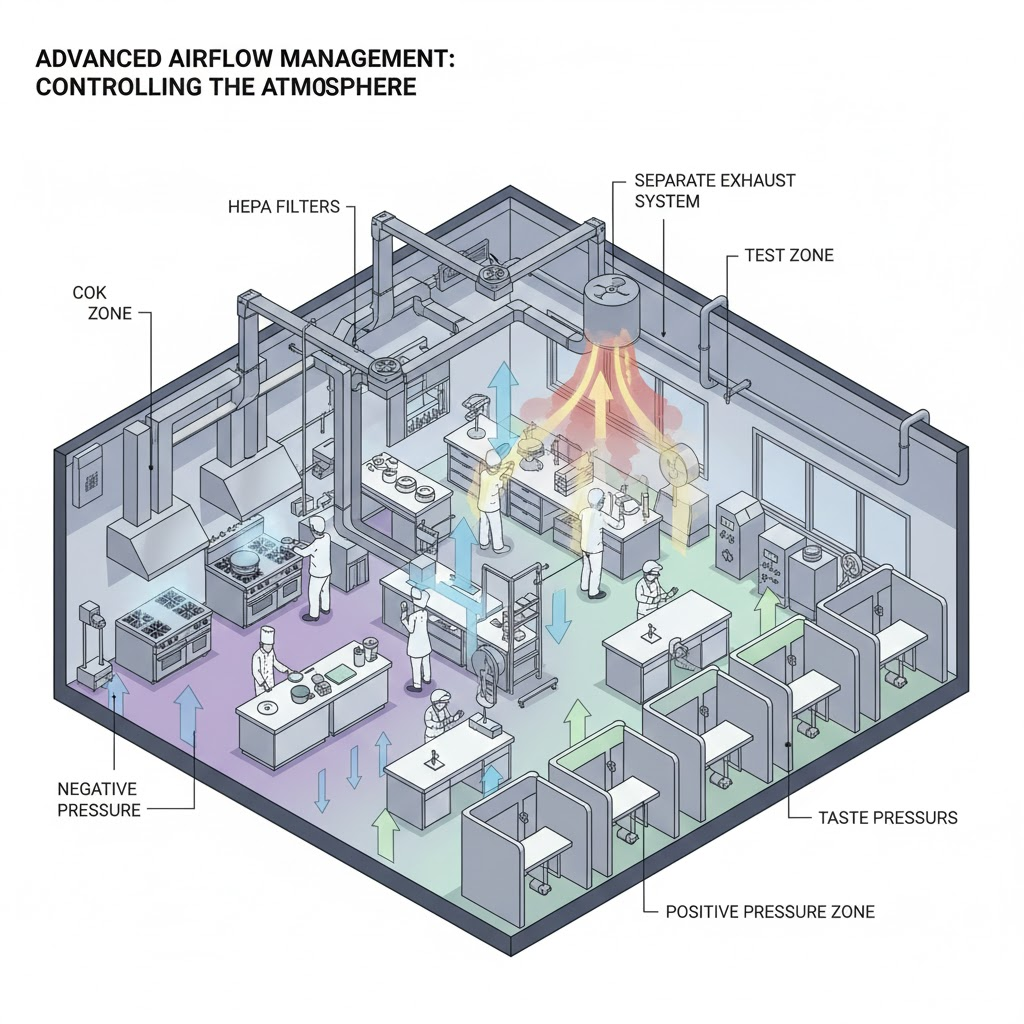
Advanced HVAC systems manage airflow through:
These systems work quietly, ensuring the environment supports focus and consistency.
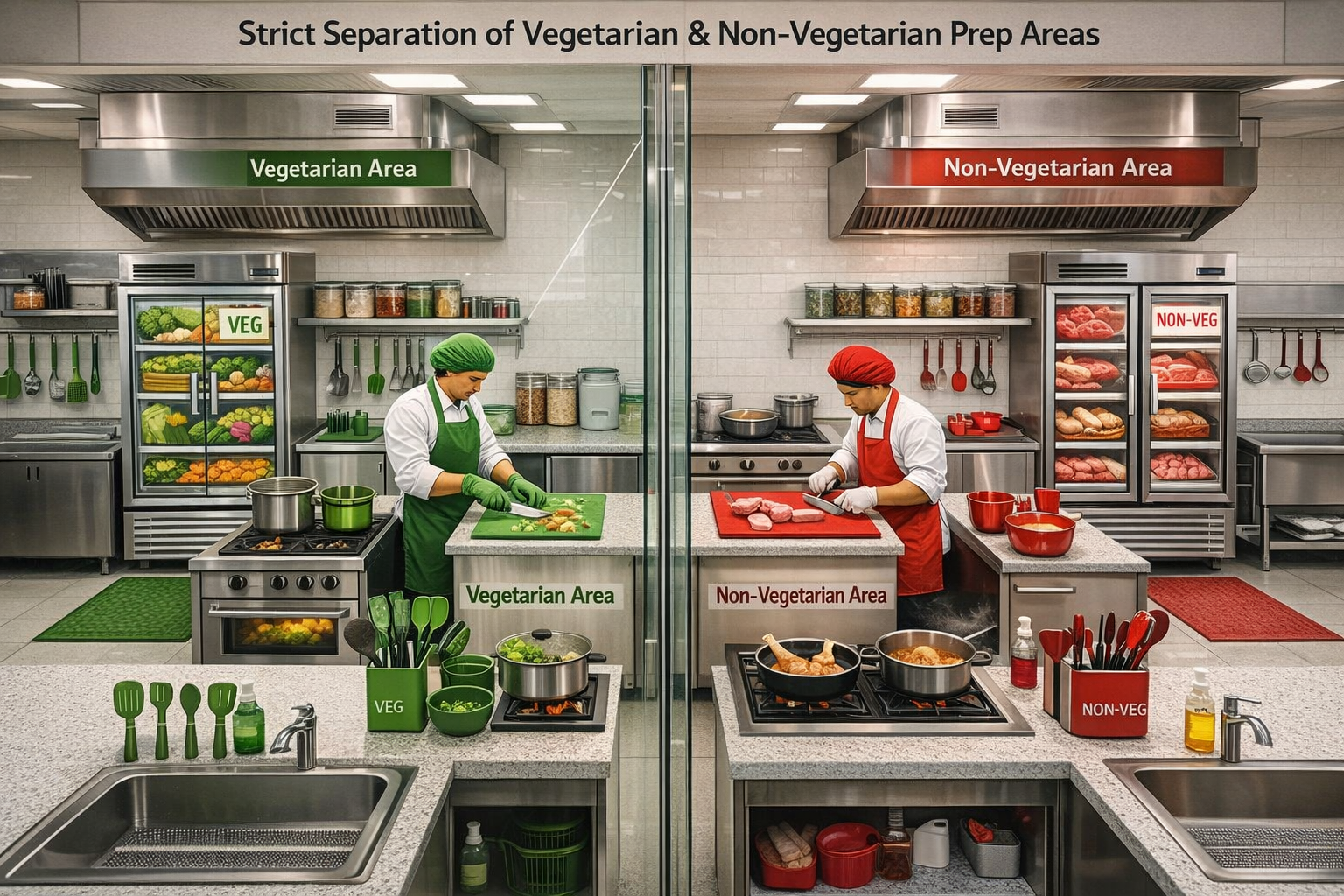
An essential component of food lab design is the strict separation of vegetarian and non-vegetarian preparation areas. Dedicated storage, equipment, prep counters, and cooking units prevent ingredients from mixing, protecting both hygiene and the integrity of test results, especially when working with allergen-sensitive formulations or culturally specific recipes. This separation is achieved through intentional spatial planning, using physical dividers or glass partitions, independent refrigeration and utensil sets, color-coded zones, and clearly directed workflow routes. Together, these measures create a controlled environment that supports precision, safety, and reliable experimentation.
A food laboratory design is not about food alone; it is about decisions at scale. Great design turns experimentation into insight, reduces risk before launch, and transforms kitchens into strategic assets.
At Rubenius, we design food labs as innovation infrastructure spaces where design shapes thinking, accelerates learning, and delivers measurable business value.
Inside a food lab commercial kitchen, every square foot has a purpose. Every curve, material, and pathway contributes to how ideas are tested and refined.
For designers, the food lab represents a new and evolving frontier. It is a space where interiors move beyond aesthetics and begin to influence thinking itself, shaping how food is imagined, evaluated, documented, and ultimately brought to life. When thoughtfully designed, a food lab does more than house innovation it quietly accelerates it, turning complex experimentation into a seamless, purposeful experience.
What is a food lab?
A food lab is a purpose-built environment for culinary research, testing, sensory evaluation, and innovation—separate from production kitchens.
How is a food lab different from a commercial kitchen?
Commercial kitchens focus on execution and volume. Food laboratories focus on experimentation, precision, and iteration.
Who needs a food lab?
Food brands, hospitality groups, QSR chains, institutions, and R&D teams focused on innovation, differentiation, and scalability.
Does a food lab reduce innovation risk?
Yes. Controlled testing and documentation reduce failures during scale-up and market launch.
How does Rubenius approach food lab design?
Rubenius designs food labs as performance-driven environments, integrating workflow, psychology, hygiene, technology, and strategic intent into every space.


.jpg)
.png)
.png)
.png)

%401x.svg)


.svg)